Showing posts with label A Filmmaker's blog. Show all posts

Monday, January 14, 2013

New Beginning

I've slacked off blogging for many many many months. But it has been adventurous.

First off, I went to UK!

Untitled

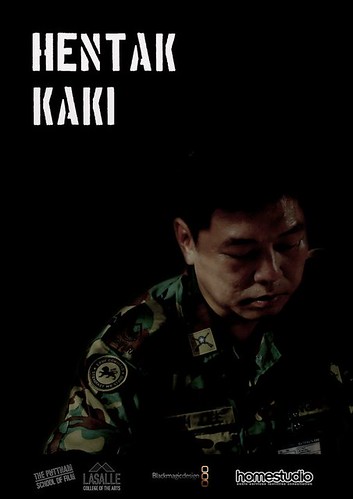
Hentak Kaki made it to an arts festival in Nottingham. So we spent 10 days there, checking out other people's work as well. It was very inspiring. In fact, gastronomy was one of the categories other than the usual performing, multimedia and fine arts, etc. The other interesting part was that it features artists from all over the world.

Right after the festival, we spent some time going to other parts of UK.

Untitled

Edinburgh castle

Untitled

Untitled

Straight after coming home from there, we got a gig in Hong Kong to film the making of The Second Coming, a horror feature film. That was almost 6 weeks away from home. But it certainly paid off, having seen the film culture in a place where the film industry is very established.

Untitled
Untitled
So the pre Christmas days were spent in the winter period in Hong Kong. I love the place for its mix of urban and natural landscapes. And my favorite part of the country is the old-school tram that runs across Hong Kong island. It is an alternative mode of transport besides the MTR and public buses. Some people say it is wise of the government to retain the trams.

Back home in the week before Christmas, I had the privilege of gathering and feasting with many groups of loved ones. And then ending the year with a home-made steamboat with close friends and my cousins. I guess these made the Christmas and New Year period of 2012 one of the best I've had. My waistline isn't as happy of course. But one of the best things in life is having good food with good company.

And now, 2013 begins with a bang. We've concluded our work in a showreel which brought back memories of fun times.


So here we are with many new projects forming in our heads for the year ahead. It's going to be exciting!

Friday, May 18, 2012

Showreel 2011

I'm so late in posting this and sharing it here. Here's a 10-minute journey of the best of the films I've made or have been in major involvement over the course of my film studies.

Thursday, May 17, 2012

Children's Garden at 8Q

The Singapore Art Museum is doing it again! This week the Art Garden: Children's Season opens for the mid year holidays and we're definitely proud to be participating this year as filmmakers. There are so many creative displays that are interactive. The best part of it is that some of art work is nostalgic to my generation. There's like a life size paper doll display that resembles a paper doll assignment I did when I was in Primary school. It's really nice to see that there's so much art work done, majority by true blue Singaporean locals (these days, that fact has to be grossly emphasized) for kids' learning. It's not just the quantity but that there's so much interactivity and creativity for the kids to explore. To be honest, the films are the least interactive. But they tell stories that the kids would understand and are able to relate with. It's the first year that films are introduced as part of the Children's Season. If it is well received, films will be commissioned every year for public display.

Sunday, May 06, 2012

Everyone must watch this

It's probably the first completed project in my new company Pangolin Films. And I'm proud to present the teaser for the 22nd European Union Film Festival to be held in Singapore this year. A lot of endless days and hard work put into this. And of course, crew and cast were all amazing. It was certainly fun doing this, especially the part where we had to spray snow out of the window.

Friday, February 03, 2012

Bitter Heart

I feel like I've been defeated many times. It's the same old thing, where circumstances and events just prove that you have no value. These days, people come to me to get to the great director that's closely associated to me. As usual, these people hold higher value as directors. All you need to do is make one kick-ass film that wins itself an award somewhere and people will just flock to you. Never mind the twenty other people who slogged their guts out. They're just technical crew. All that matters is the director. He's the ONLY brain behind the film. Everyone else is basically nothing. The raves about a film goes only to the director. The job prospects only go to the director.

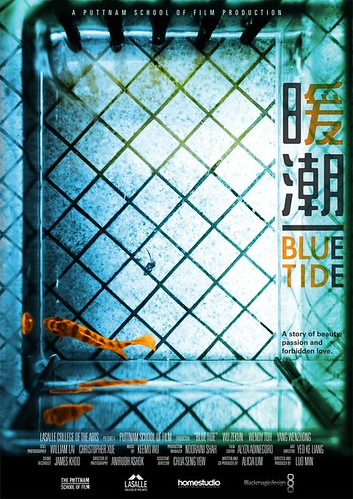
These days, I'm tired of having people receive credit for my work. Tired of being able to count the number of people who appreciate my artistic quality as a 'non-director' with one hand. Tired of Blue Tide being rejected all over the place. We didn't get selected for Singapore Short Film Awards. It is a disappointment, not a big one but still a disappointment.

I'm really bitter and I refuse, call it pride, but I refuse to ride on the popularity of another person to gain support. I believe in the individual's work speaking for itself. I'm just not given credit for it because only directors are the royal highnesses in the industry. Right now, I'm basically feeling the brunt of it and its putting me in a pretty bad mood these days. I've noticed that producers are made the scapegoats for everything that goes wrong on set. And after that, when the film earns some credit, they get none of it, despite all the crap they went through to make sure the film gets made.

Sometimes I wonder if I should've stuck to my previous job. By now, I'd probably have enough to afford a house. I'm paying a huge price just because one day I decided that film is the way to go for me. I'm a first class honours student earning less than 2 grand, I'm constantly exploited as a producer, I've been referred to not as me but as someone else's producer or editor or . And that someone else, would be the director. I'm not receiving support because what I do is "a waste of time". I've been working long hours and I might actually be paid less than a dollar per hour on average but whatever I do brings in shit loads of money or fame for some people.

It seems really hard applying the contentment theory here. Be thankful you have much and be thankful also when you have little. It's hard to be thankful when some else is given credit for your work and becomes esteemed way above you. It's hard enough to make me even want to think twice about being a founder of the company along with the rest of them. I'll just have to keep going through the mental stigma of being shoved aside, as usual. Editors, producers, sound people, who cares bout them.

Now's just trying to be fueled by passion and sense of calling rather than bitterness to excel.

Friday, October 07, 2011

Silent Treatment

Finding some time during lunch for this.

It seems like every week, there's some sort of discouragement or low morale at some point. I think the root cause would be the way this industry has become.

I feel directionless, unwanted sometimes, inspiration-less, I feel like staying home with nothing to do, or go to Sungei Buloh and face the ironically bird-less forest and just stare at it blankly. The competitions are coming up but I have no ideas. Life is a bit of a drag now.

I had to drag myself a bit to attend a course the last three days in SMA. But I did sort of enjoyed it. Felt like I went back in time to level one. The other two participants were totally newbies. And when we all introduced ourselves, after hearing the experience I had, my qualification, and the achievements I've been part of, they all looked at me incredulously and asked "what the hell are you doing here?" Well I'd like to know that too.

But the good thing was, I met more people who're interested to join the industry and it was fun sharing my experience with them, apart from finding myself doing a location recording demonstration for them too. Very coincidentally, the head of programs in SMA is my ex-lecturer from Ngee Ann Poly, whom I was actually searching for. Now we're back in contact. He taught me Radio Production back in school, the only other elective I excelled in besides scriptwriting. It was a pleasure telling him how far I've been after graduating from poly.

So my instructor was teaching the basics of production, one thing he said which I felt was the most important thing for every film person to know, rekindled my drive a bit. Firstly, its the reminder that there's no fame or fortune. It comes for some but not everyone makes a name for themselves. In the end, the only thing you can run on is passion. Secondly, there's always a story to tell. There're plenty of stories that people have never heard. And a small story can make a difference to someone's life. Then again, its easy to believe in the power of media but not easy to believe in the power of the storyteller.

So what stories should I tell? I have not a clue. I'm bad at cooking up stories, another irony of a being a screenwriter. Need a day of bumping around in the uncrowded outskirts of the country and some black pepper crab would be nice.

Tuesday, September 27, 2011

Back to earth or further beneath

Amazing how short-lived certain forms of happiness can be.

I'm back to work more unhappy than before. Maybe because I let slip another editing job for a lousy production job. Maybe loyalty is a strength but I'm definitely not strong enough to tolerate the after effects.

I want an editing job. But I'm always put into production just because I'm able to do it and no one else wants to. Producing has always been like being Cinderella. No one wants to do the cooking and cleaning in the house so the producer does it. Maybe it's my unrealistic expectation that life will be a little improved after the awards. But no. First, the award was not rendered to me. In this country, the only person that counts and gets all the fame and credit is the director.

And some may think its not so bad because at least I'm writing. But no, the writing is slowly turning into promotional writing for a chef I don't really care about. Chef on The Road was fine. It was at the very least, interesting and educational. Now I'm searching for locations for a new series called Mobile Chef and honestly, its starting to feel like I'm doing marketing and public relations to promote this chef to god-knows-who.

The proposed idea is for him, the chef to work in a mobile kitchen in various locations in Singapore. He has to cook up a meal in his unique avant-garde style relative to the location of his kitchen. I would be fine if that was it. Cook up something for common people to get a taste of food that's different. Who would mind?

But no. The Mobile Chef is proposed for rich people who will be driven in limousines to the location to dine in the mobile kitchen. The series isn't serving the public, which I thought it was at first. I though people are gonna catch the series and see the locations in Singapore and food in a different light. But no, this series is made for only one person, the chef. It just promotes him ONLY.

And why should I care about rich people. I might be a bit extreme but a vast majority of rich people I know in this world are arrogant pricks. I don't want to be near them if I can help it. Whatever it is, I feel like I'm working in some Expat magazine. Some people say you have to compromise with what you want to do in your day job. But there's always a limit. I don't care about the high-life, I don't support it now and I never will. Not when hungry children and trafficked prostitutes are on my mind all the time.

This morning I came to work and sat down looking for locations in tears, literally. I was crying. For some reason I just couldn't stand being part of a project that promotes the high-life, even if it doesn't do it directly. All the brief needed to mention was "guest picked up in luxury limo and brought to the exclusive dining experience" to make me want to puke.

On the hypocritical side of me, I would probably have been a lot more tolerant if I was only the editor and not the concept writer. At least I'm able to detach myself when editing and just edit 'professionally'. I can't do that with writing. Maybe that's why I can only choose editing as a day job.

Monday, August 08, 2011

Now that's hard to believe

Surprise surprise...

Ok what have we got here.

I just received an email informing me that I've been nominated for the McNally Award, an award given to the best achieving students or something like that. And it said I'm the top scoring student of the Media Arts faculty. I though Sara scored higher than me? And I have no idea how someone who scraped through by 0.33% to get first class can be the top of the faculty. Many question marks indeed.

Nevertheless, just by being nominated, it is truly an honour. And I have none to thank but God, who provided my mates, the strength, the ideas, the quick-thinking at the times I need, and most of all patience and perseverance. And it is by nothing but grace that had brought me to this place.

Recently, I had to repeat the journey since I graduated from poly for quite a few people to hear, and each time I tell it, it is more apparent to me that God had plough a path for me to walk. Most people don't know, but film was not my first choice. I had applied to Theatre Arts and got a place only to receive a call 2 weeks before school to find out that the course can't go on because of poor intake. I scrambled for my second choice, which was film. All I cared about was to get into a place where I can write and do creative work. I had a bad working experience after graduating from poly and that fueled my desperation.

So I entered film school, all lost and not knowing what to expect, full of doubts and feeling intimidated by the fellow classmates who seem to know what they were doing, as opposed to me, who have no idea why I'm sitting amongst film students. The assignments and projects came and I was obviously underperforming as compared to my peers. That discouraged me a lot.

I survived the horrendous level 1, unsure if I ever get my chance for anything at all. I persevered and slogged for the egos of others. Level 2 came and I found my love for editing and opportunity to write. I gained experience by crewing on many sets in school and professional sets outside. Finally, the first film that I wrote was an affirmation in my pursuit to write.

In level 3, I was determined to make my own learning curve. I stuffed myself into the directing module, took up extra roles as the producer and sound recordist/designer apart from my major and minor subjects all because I knew opportunities in doing those are scarce outside. Better to do them now than to miss the chance.

So level 3 sort of concluded school very nicely for me. Having learnt almost all the aspects of filmmaking, I am now a jack of all trades but a master of none. It's good and bad I guess.

The first class honours haven't really done much for me. Some people just brag about me being a first class student but no one is even thinking of paying me a little more for the fact that I'm first class. So much for paper qualifications.

I'm gonna just start my work, do my freelance stuff, rack my brains for creative ideas. That's all.

Tuesday, November 24, 2009

Finally we're done with another semester. And it had been a rough ride because so many shoots cramped together. But overall it had been a disappointing semester because I found myself not learning very much from the Kill Bill and FLW exercises. My solo was pretty mediocre and I lost the pitch which means I'll probably never get to make a film of my own within film school.

And I found some photos, which I never posted here.


That was one of the Kill Bill exercises and the huge photo at the bottom was from FLW which is French Lieutenant's Woman.

Now I'm serving my internship on Wee Li Lin's second feature called Forever. And I'm tasked to make a behind-the-scenes video. I have no idea how I'm gonna do that to be honest. But I'll just take whatever comes my way. I got some pictures of the set too which I don't think is a good idea to be posted at the moment. But the set looks awesome aesthetically. Anyway, much of my holidays will be spent on set, during which I get to observe the camera crew and scrutinise the Red Cam. It's one of the great motivations of being on set somehow.

I had been uber, extremely, overboard upset about losing the pitch. Don't ask me why. I only knew it mattered to me so much after I didn't get selected. Even now I get pangs of disappointment and moodiness from it. But I had been assigned to write Veronica's script, so I guess it isn't that bad.

I guess I try to compensate for a failure by crewing on many projects just so I'd do something maybe. I had agreed to work with my seniors on two thesis films and will be part of 4 of my classmates' diploma films. I might be killing myself but I don't really want to pull out of any of them at all. That's like the outlook for the next few months to come.

Thursday, August 20, 2009

Lighting

We never had this in our first year, which was a real shame. Imagine, we're second-year film students and we're clueless about lights and lighting techniques. At least this academic year, we have a lot more intensive lessons on camera, lighting and cinematography. We've had a couple of lessons and they were very useful and practical.

We were given exercises and scenarios to create. It wasn't so much of mimicking but really trying to achieve certain forms of lighting and learning what effects different lights bring.

Photo0055 Photo0061

One of the exercises was to light an object up without creating shadows. We thought it was going to be difficult but we figured the trick to doing that from experimenting and putting together different lights and filters. And the trick was to shine soft light on the object and that would create a very faint shadow or no shadow at all. So if you saw the picture on the right, we bounced light off a styrofoam board and further soften the light with a diffusers. At the end, the whole setup looked like some science experiment.

Then we were given the exercise to create sunlight. For that, many of us automatically grabbed HMIs. HMIs are lights that are made to literally produce light of similar colour temperature as the sun. To make it look like the evening sun, we added an orange gel, the proper name being Colour Temperature Orange (CTB). (Something we found out not too long ago as well.)

IMG_3490
IMG_3489 IMG_3494

The following lesson was a lot more challenging. We were given commercial ads that had models posed nicely. And we had to identify the setup that was used to achieve the look. This was more of a mimic now, but it taught us pretty well, because we had to learn from experience. So we had some of us posed and then we put up the lights. Overall, we did pretty decent jobs and I can't emphasise it more; that we learnt a lot.

IMG_3523 IMG_3522
IMG_3505 IMG_3508

Then we lit up glassware, with reference to beer ads. It was pretty interesting and another challenge altogether. I remember a lesson I had last semester, about 3-point lighting and also colour temperature.

image from wikipedia

3-point lighting is almost like a standard setup. How we achieve different stuff is really based on creativity, on working around. There isn't really a hard and fast fixed method to achieving anything.

This entry would probably serve to remind me of the lessons in lighting. It was a module truly appreciated.

Wednesday, April 29, 2009

The end of one adventure

I've officially finished Level 1 in my film studies and now looking forward to Level 2. Of course, this journey like every other journey had its ups and downs. Somehow I am thankful to have survived the downs and even more thankful to have learnt valuable lessons. 

It is uncanny the way how right after biblical lessons are taught to me, the test comes. This semester, as we were being placed under inhumane schedules and put together for a studio shoot, peoples' characters and qualities tend to show themselves. The greatest virtues I had been trained to have are those of a godly person, basically possessing the fruit of the spirit. It has been challenging and painful but still more precious and important than being the best director or screenwriting.

My solo really put me through hell. Shooting was quite ok, other than the fact that I had to shoot two scenes with a camcorder. But during post-production, I realised more than half of my footage was missing. That was disastrous. And not to mention that the sound was horrid cos of all the echos that got captured too. While I was recording the cafe scene, there was a bunch of girls talking really loudly and laughing at the top of their lungs. In the end, after doing a rough cut, the remaining clips I had allowed me to fulfill the script. At this point I knew the hand of God was in it. It had been and still is a habit for me to utter a prayer to God before I embark on a film or a project. So the edit was done and it didn't look too bad but still a lot of work needs to be done on the sound. Of course it would have been a lot better if I had with me everything I recorded but ah well. Somewhere down the road I'm planning to expand the script and reshoot the story and have the film submitted to film festivals. 

The studio shoot was one of the major items we had for the semester. It starts with each of us pitching for a story, out of which four got selected. So a total of four productions were scheduled back to back. I played a minor role in one and major roles in two. 

The Setting Sun
For some reason, I became the editor and then the script supervisor and because Jensen was MIA, I took up his role as a still photographer. As usual, it was fun but tiring. It had been a pleasant working environment I would say because we all just covered up for one another and people did their jobs well. Somehow we were motivated and we even managed to finish ahead of schedule. 


That would be me trying to sneak a 10-second break after setting up a tripod that's twice my height.

Lonely Legs
For this shoot, I had taken up the challenging task of being the Art Director. The experience for this shoot wasn't as positive but I learnt a lot more here that in the other shoots. Somehow, the more unpleasant the shoot, the more I learn. Strange enough, it just has to work that way. 


Basically, I had to dress up a bedroom, a dining room attached to a telephone area and the stairs, and a balcony. This makes my art direction one of the most challenging because of the number of locations within the set I had to put up.


This is the wardrobe in the bedroom. It actually comes as a board with wardrobe doors. However, the script demands that the mother has to walk to the wardrobe to put clothes in so we had to find ways to use spare planks and grip equipment to emulate the inside of the wardrobe. Not very fun but the result is pretty awesome.


The shelf in the picture on the left was meant to be empty. But at the last minute, the night before the day of the shoot, my director realised that the shelf would be in shot for a scene. So Rena, my props girl and I scrambled to have it dressed. We bought a bulk of the stuff up there from Daiso.  The shelf in the right picture was in the boy's bedroom. Those little figurines there are actually the really old MacDonalds' figurines which I'd kept since I was a kid. It proved it's usefulness I guess even after so many years.


The first challenge was to meet the demands of the set at zero cost. Yep, my director had refused to spend a single cent on the art direction. It was tough though it was in the interest of everyone. So I had to beg and borrow. At the end, minor purchases still had to be made. In my opinion, a budget always has to be set aside for art whether there is any intention to spend it or not. I found myself driven to a corner only because there was no money set aside for me to purchase something I can't borrow. 

There was a lot of friction between people during the production and somehow I hope these conflicts won't be carried to the next year. I did mention that the previous shoot was enjoyable, this one was not halfway as enjoyable though the personal achievement was greater. 

That should be it I guess. Now that its the break, many of us are planning to write our scripts for next semester's solo. Hopefully, I would get my opportunity to finish my script.

Friday, November 21, 2008

Ikiru

Very recently, I had an analysis written about an old Japanese film for an assignment. But I think such conclusions should be shared instead of just printed and handed in to a lecturer. Not many people have seen this film Ikiru directed by Akira Kurosawa. It's a film worth a trip to the esplanade library to borrow. This is my take on the film.

The film is divided into three sections. The first section shows the conflict between a community group and government officials over a vacant plot of land. The unfortunate citizens battle with bureaucracy, finding their appeal being pushed from department to department and back where it started. By the time it makes a full circle, Kurosawa has gone for his fateful medical appointment, where he learns that he has stomach cancer. (A side trivia: Stomach cancer is the leading cause of death in Japan at that time.) It is made more dramatic by the fact that he knows he is going to die and even the number of months he has left to live. After Watanabe leaves the doctor’s office, the doctor asks his intern: “If you were like him with only half a year to live, what would you do?” The film answers the question.

Back to the subject of bureaucracy and Watanabe being part of it, Watanabe is famously known as one who never takes a day off. In the opening scene, after introducing the ‘hero’ of the film, we see the typical Japanese government office: piles of paper on desks but no one is working. A scene perhaps making a point against bureaucracy.

At this juncture, Kurosawa forces his audience to witness the futility of his relationship with his son and daughter-in-law. Here we get to see scenes of the past and the present between Watanabe and his son, Mitso. Their relationship however had been strained, as Mitso and his wife seemed to care mainly about Watanabe’s pension and their future inheritance. This is proven by the conversation both husband and wife had in the house, not knowing that Watanabe had been quietly grieving in the dark.

Watanabe ‘comes to his senses’ and begins to reflect on how meaningless his life had been and resolves to make his last few months meaningful. Many times, he tries to break the news to his son but never had the chance to do so because Mitso simply ignores him. Realising his failure in both work and family, he encounters a novelist while drowning his sorrows in sake. The novelist takes him through the nightlife and vices of modern Japan - pinball, alcohol, strip clubs and dance halls. The night scene is so packed with people that it looks as though Watanabe is drowning in humanity. It was truly an experience for him but none of it satisfied his quest to seek meaning in his life and so he moves on.

The next phase begins with a girl, Toyo, from Watanabe’s office seeking his signature so she could leave her current job to a new one. This encounter with her leaves Watanabe ‘infatuated’ with her. He was not sexually attracted to her but admires her young and vibrant energy. After ‘dates’ with her, he tries to express himself but finds himself in difficulty. She misreads his intentions.

Toyo: What help am I?

Watanabe: You - just to look at you makes me feel better. It warms this - this mummy's heart of mine. And you're so kind to me. No; that's not it. You're so young, so healthy. No; that's not it either... You're so full of life. And me... I'm jealous of that. If I could be like you for just one day before I died. I won't be able to die unless I can do that. I want to do something. Only you can show me. I don't know what to do. I don't know how. Maybe you don't know either, but, please... if you can... show me how to be like you!

In the conversation at the coffee house, the scene becomes uncomfortable to watch as we see Watanabe practically trying to drain life out of Toyo. Toyo shows him what she does in her new job; she makes toy bunnies. The significance of her work comes when children find joy when playing with the bunnies she makes as she tells Watanabe:”... that is all I do, but I feel as though I am friends with all the children in Japan.” And that is the answer to the meaning of life that Watanabe has been searching for. Prior to this comment made by Toyo, Toyo had admitted to Watanabe that she gave him a nickname – the mummy. Watanabe had been living constantly under the slavery of his habits, his regular comforts, the empty hours he spends behind his desk, and the constant longing of the companionship of his son.

And Watanabe realises that being in the company of a younger individual would not help in his quest to seek meaning for his life but using what he has at that point to do something significant. After his conversation with Toyo, he returns to his office and searches his desk to find the long-neglected petition that originated from the community group – something no public official does.

The final phase moves the audience forward to Watanabe’s funeral. His death appears as sudden to his colleagues and family as we see them recalling Watanabe’s last days. Their discussion centres around a debate on whether Watanabe knew of his impending death. The pieces of the puzzle are placed in the flashbacks of what Watanabe did. He had arduously sought approval and personally saw through the construction of the park on the vacant plot of land. The futility of bureaucracy came through as the audience see Watanabe constantly and even violently rejected by the top positions in the civil office.

Ironically, Ikiru is the Japanese term for the phrase “to live”. Watanabe had only truly lived in the face of impending death. Such humanistic take forces the audience to contemplate on their own sense of mortality for indeed life is short. Awakened by the knowledge of his coming death, Watanabe realises he is like a corpse, dead for 25 years. The novelist he met made the profound comment, “... having cancer has made you taste life. Man is such a fool. It is always just when he is going to leave it that he finally discovers how beautiful life can be.”

One manipulation Kurosawa engaged in the film is the manipulation of time in a series of shots showing the group being frustrated by the wheels of bureaucracy. The dissolves between each shot indicate the passing of time. Kurosawa also uses flashbacks significantly in the scenes showing Watanabe and his son Mitso when Mitso was a child. The voice of Mitso as a child echoes the warmth and the loving relationship he had with his father, a stark contrast to the distant relationship they have at the present moment. The use of such contrasts and cross dissolves evokes feelings of pity and dejection the audience is made to feel for Watanabe. Watanabe then is seen as one who has no present or future but a person who lives in the past

The brilliance of the film is evident with the way it has been distinctly divided. In the first half, we know of Watanabe’s situation, the reasons for his sudden mood change, his apparent frivolous night he had with the novelist, and his attraction to Toyo. The other characters being oblivious to what he is going through are left puzzled at his ‘outrageous’ behaviour while we see something like ‘the blog of Watanabe’. Ironically, it’s the people who do not share any close relationship with him that know of his condition: that would be us as the audience and the doctors who diagnosed him. Those whom he love dearly and those who share a more personal relationship with him were ignorant to what he is suffering.

At the second half, the film cuts to the wake of Watanabe and for a moment we are left to figure what Watanabe had done in the last few weeks or months of his life. The question is then addressed by the various accounts of the people who encountered him before he died, making sense of his actions which seemed unusual for Watanabe. This sort of reminds me of the Rashamon effect, where many accounts of the same event are given. This however differs to Rashamon as accounts were motivated by opinions and not facts. We see the reactions of others towards him, their excuses, their inadvertent knowledge on the truth, and the rejection of both the truth and Watanabe.

Some of the key recollections of Watanabe’s actions serve as proof of the determination Watanabe had to live life. The park serves as a pretext for this action. It does not matter who tries to claim credit for building the park because that isn’t the main issue here. The key is that Watanabe discovered life through dedicating himself to build the park. It isn’t the result, it is the process that mattered here. As a few testimonies were told, we find out that Watanabe went through what most people wouldn’t. He had forced his way through bureaucracy, humbly sitting and waiting, and most of all not being intimidation and not taking ‘no’ for an answer. When asked why such treatment and humiliation doesn’t anger him, all he says is: “No, I can’t be angry with anyone. I don’t have the time to be angry.” This makes one clue big enough to conclude Watanabe’s knowledge of his coming death.

At this scene in the funeral parlour, the camera is placed at a low height, as though we are all part of the wake, and we the audience have a testimony of our own about Watanabe. The final revelation came only when a police officer enters with the battered hat of Watanabe and tells of seeing him on the swing in the park, singing mournfully in the snow.

Music played a very major role in the film. When Watanabe explores the nightlife, a notable scene is in a night club where Watanabe requests the pianist to play the song Gondola no Uta. He then sings the song in great sadness, affecting those watching him. The song is a ballad written in 1915, the lyrics encouraging maidens to find love while they are still young and beautiful, for everything fades quickly. And this reflects strongly the theme of the film. At the end of the film it is this song that Watanabe sings while sitting on a swing.

In the beginning portion of the film, as Watanabe is home, the radio in his son’s room ironically plays the song Too Young to Love. During the flashback scenes of Watanabe’s wife’s funeral and the young days of Mitso, the oboe melody plays on. In the bar, J’ai deux amours is played. When Watanabe vomited, Music Mambo – Take it Away was played and the whores in the car sang Come On ’a My House.

In the scene at the coffee house where Watanabe tries in vain to express himself to Toyo, Poupee valsante played over the phonograph. As Watanabe struggles in his confession, Toyo occasionally glances enviously at the other customers her age. The music then changes to The Parade of the Wooden Soldiers. Once Watanabe grabs the toy rabbit and runs down the stairs, a young lady all dressed up ascends the stairs with a birthday cake and the others sing Happy Birthday. So it is a surprised birthday celebration going on in the background. The irony is seen in that as youth goes up the stairs, age goes down.

This is a film so haunting and touching because we are made to feel the emotions of Watanabe. We had been given the privilege of being his ‘unseen companion’ in the beginning. In terms of even relevance, Ikiru’s setting is in the 1950s but today, the principle behind the film lives on, about living life in no obligation to anything or anyone but to the self. Richard Brown said:

“Ikiru is a cinematic expression of modern existentialist thought. It consists of a restrained affirmation within the context of a giant negation. What it says in starkly lucid terms is that ‘life’ is meaningless when everything is said and done; at the same time one man’s life can acquire meaning when he undertakes to perform some task which to him is meaningful. What everyone else thinks about the man’s life is utterly beside the point, even ludicrous. The meaning of his life is what he commits the meaning of his life to be. There is nothing else.”

With much subtlety and toying with film parameters, Kurosawa brought about one of the most profound films, one on the surface looked simple and perhaps irrelevant but watching carefully would hear the movie screaming a big wake up call to those who waste their lives away.